Role
Lead product designer
Skills
Visual design
UX research
Team
5 designers
Timeline
May - August 2025
Timeline
Project roadmapping from ideation → dev handoff, with an emphasis on user research and testing
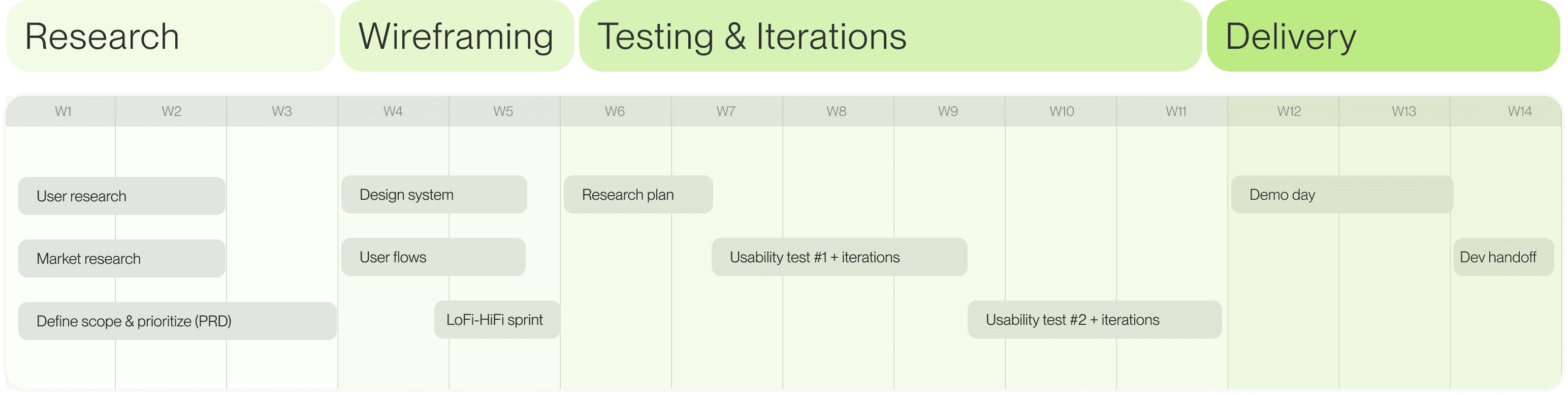
Our non-profit client, also a Senior UX Researcher at Google, emphasized making heavily user-centered solutions through rigorous user research and testing.
Problem
Defining the problem space with our non-profit client: finding activities and planning logistics for outdoor activities is stressful
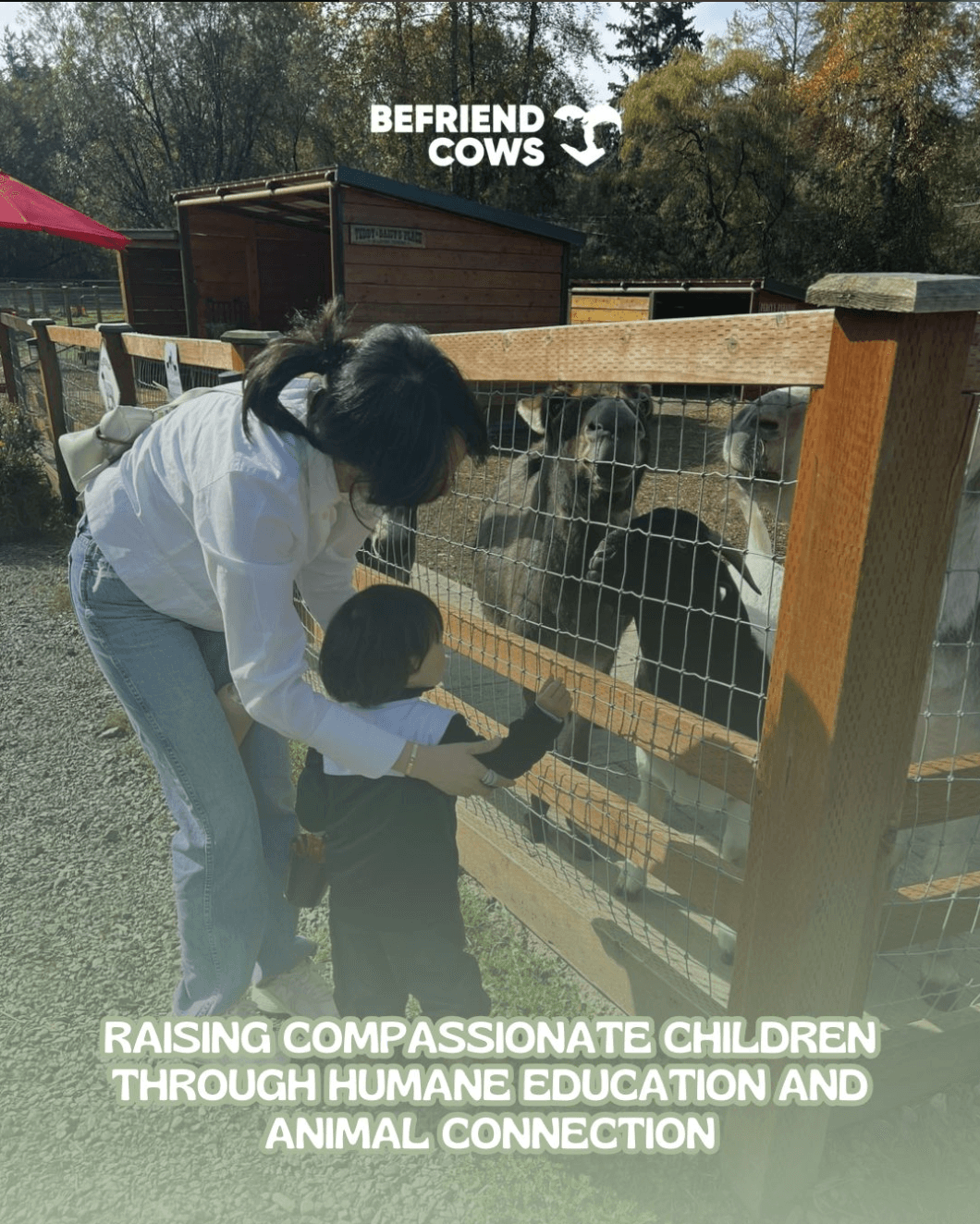
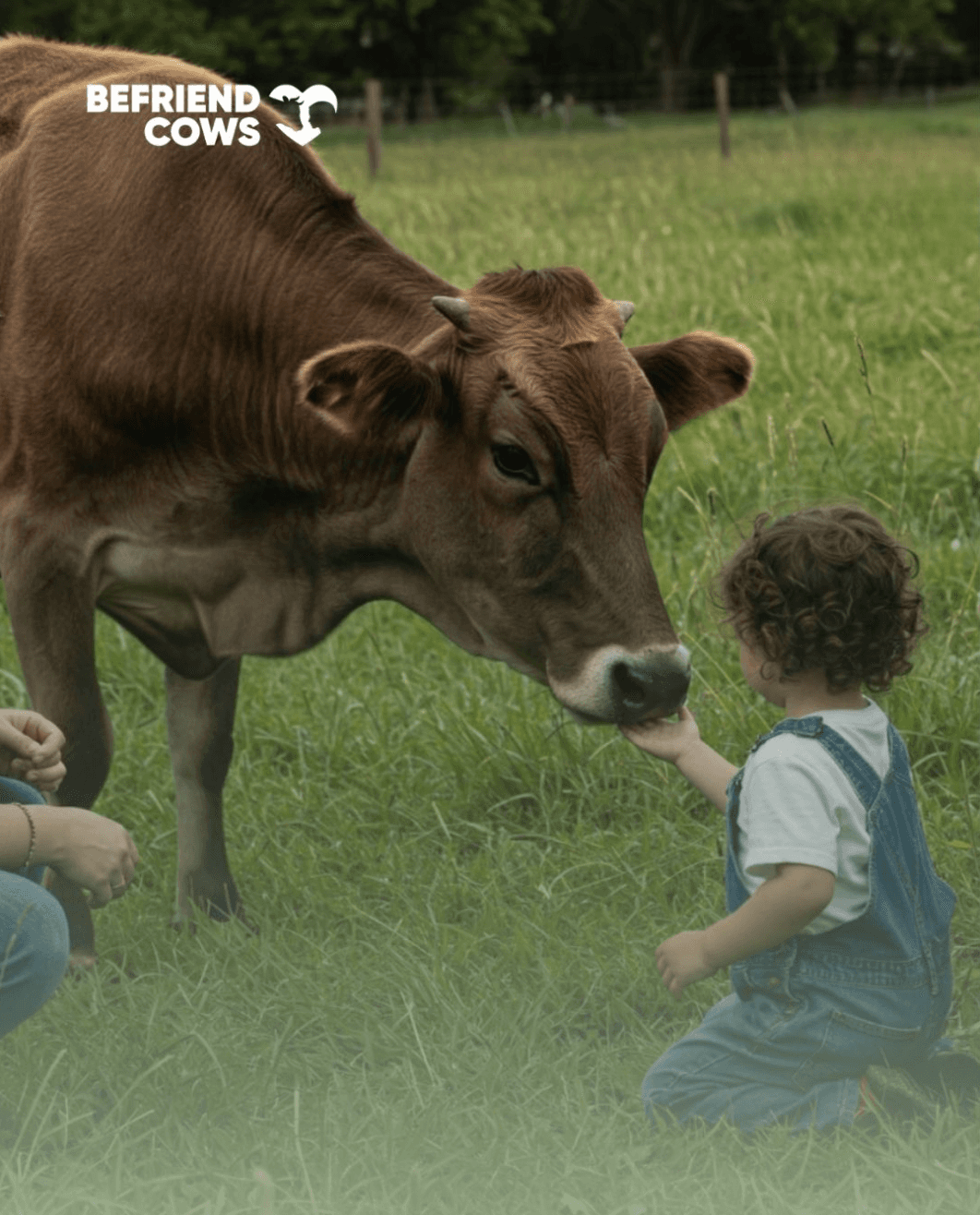
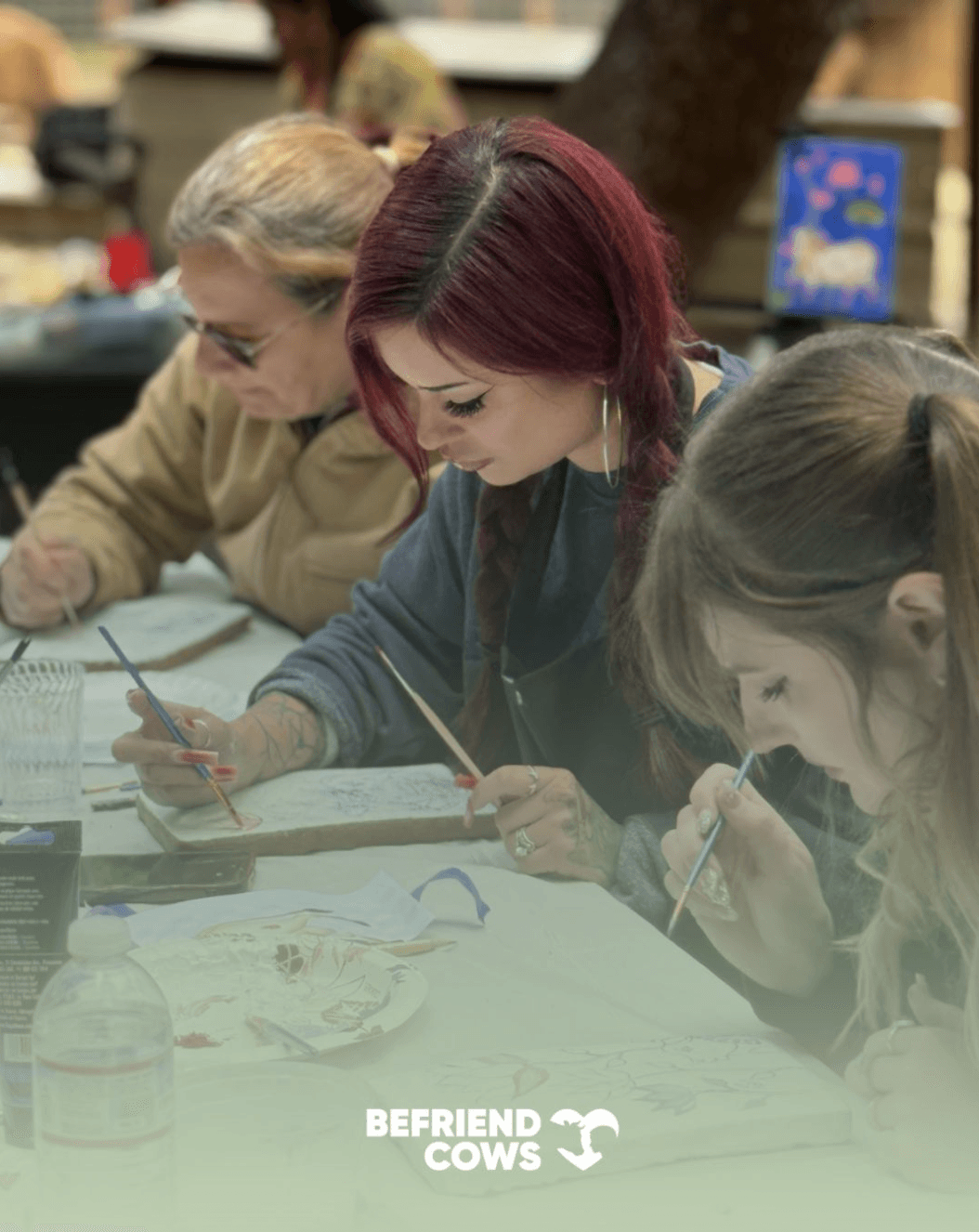

Breaking the problem down into subparts, essentially 1) Discovery is scattered across different sites
2) Dealing with logistical details is a headache and 3) Current platforms don’t prioritize outdoor activities
Our guiding question
User and market research
Parents and volunteers value reliable, comprehensive information
100 surveys
23 user interviews
6 competitors
#1: Cost, safety, and distance from home are the most important evaluation factors.
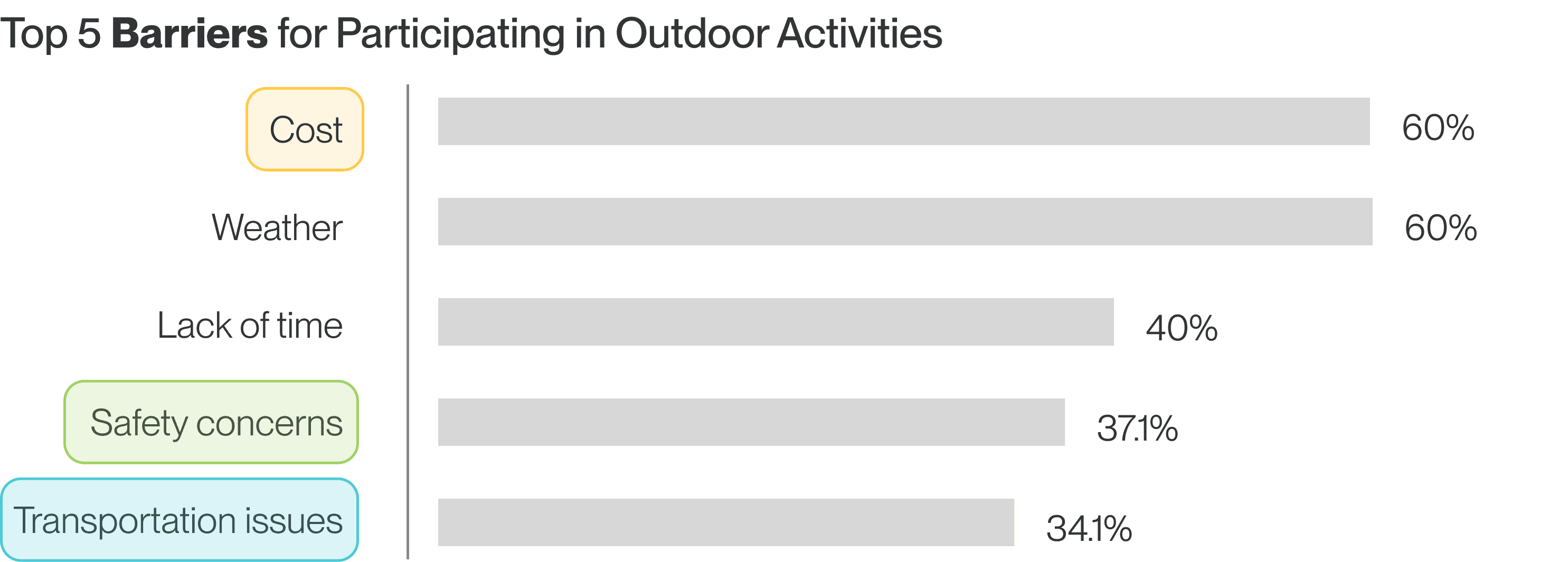

#2: Top 2 biggest pain points: incorrect information & coordinating logistics for the group.
#3: After auditing similar platforms we decided to make our vertical 1) our focus on family-friendly/volunteer events and 2) a centralized event platform that supports planning






With research in mind, we designed for a peaceful mission-focused experience, quick decision-making, and a volunteering/outdoors personal touch.
User testing and iterations
Setting up calls with our users to make the experience more mission-focused and personalized
Our biggest challenge
Midway through, our PM became unavailable, creating disconnection between us designers and our NPO client.
Without a clear middleman, staying on the same page was hard.
Designer
Designer

Designer
Designer
Designer
Client
Without a clear decision-maker, tasks were loosely distributed and the team lost alignment with the client’s goals. This resulted in understandable client frustration, and faulty prototypes for usability test #1.
As a way forward, I took on some tasks to reestablish clarity and trust.
Designer
Designer
Designer
Designer
Design lead
Client
To make sure the same mistake wouldn’t be repeated, I took on the PM responsibilities to restore clarity, distributing TO-DO’s based on strength and interest, and partnered closely with the client.
Some outcome metrics
52%
User satisfaction improvement
14
Moderated sessions
2
Rounds of testing
#1: Changing nav bars to “Visit” & “Volunteer” to emphasize the product’s unique value prop
BEFORE: Tabs didn’t convey unique volunteering/outdoors focus and encouraged more passive user action
Explore
Save
Itinerary
Profile
Doesn’t convey app’s unique focus
“Save” encourages more passive user action
Matches existing mental models
AFTER: Now they highlight the product’s dual focus & encourages active event exploring
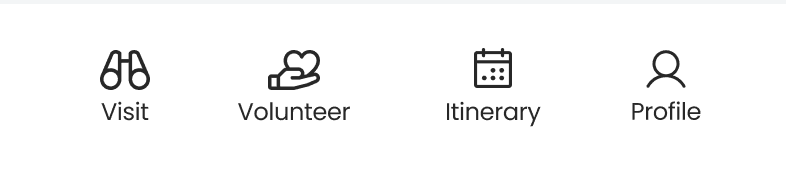
Reinforces volunteering as a core value prop
More descriptive and specific
Confusion between Visit & Volunteer
#2: Increasing value and visibility of the Itinerary building feature
BEFORE: Users didn’t seem to want the itinerary-building feature...
Prefers Gcal
Prefers flexible planning
60% of users would NOT
use the itinerary feature
Most users would prefer using Google Calendar, where all of their other plans are. They also voiced wanting a flexible way to plan, as things can take less/more time than expected.
AFTER: Proposed “Karma point system” so users have an incentive to use

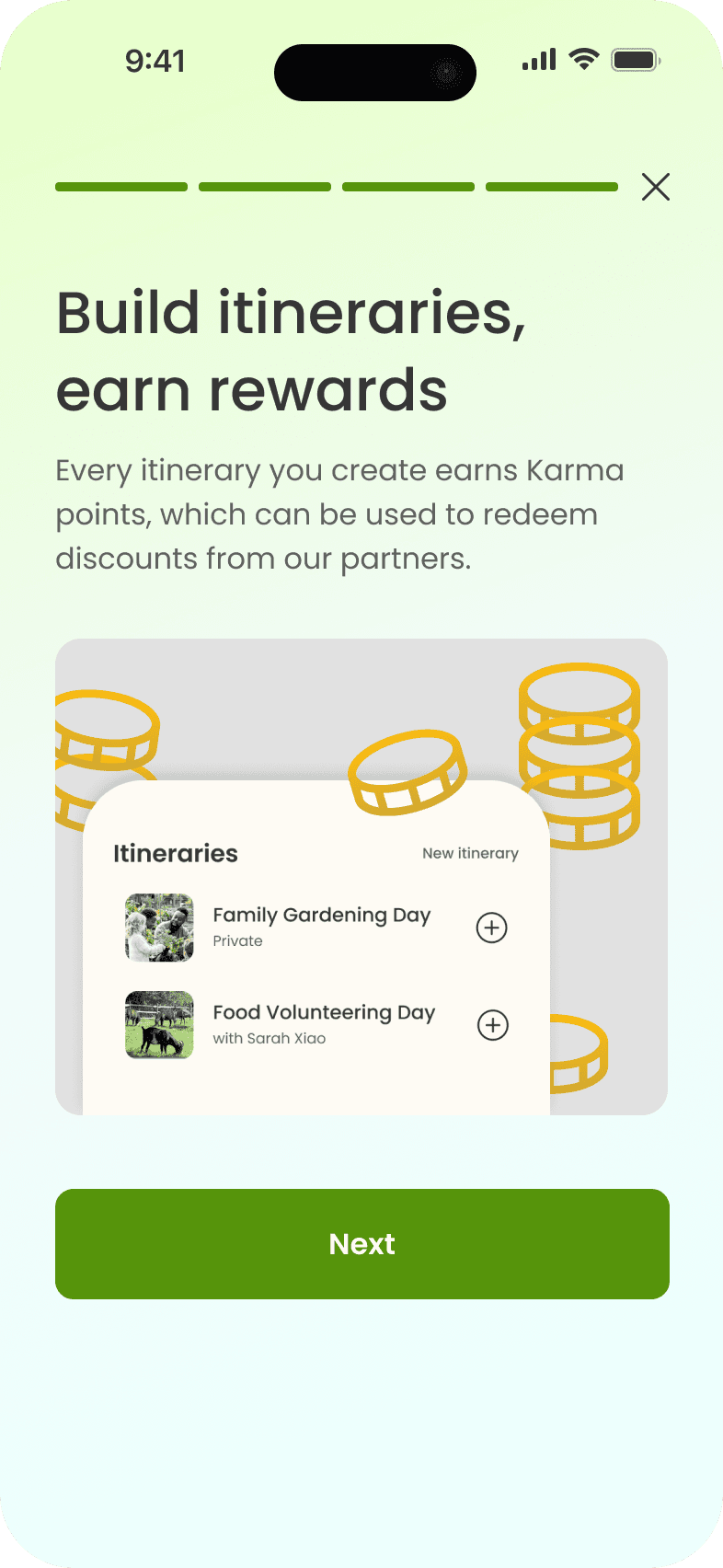
While we weren’t able to fully flush this feature out, the idea is to have users to continuously engage in acts of kindness by rewarding them with discounts to paid animal sanctuary tours and similar activities!
#3: Adding more user-demanded filters to cut decision-making time
BEFORE: Users wished they could access filters more quickly, and have a greater control over logistical filters (specific location, date, etc. )
AFTER: We added quick horizontal chips for quicker access and specific filters.

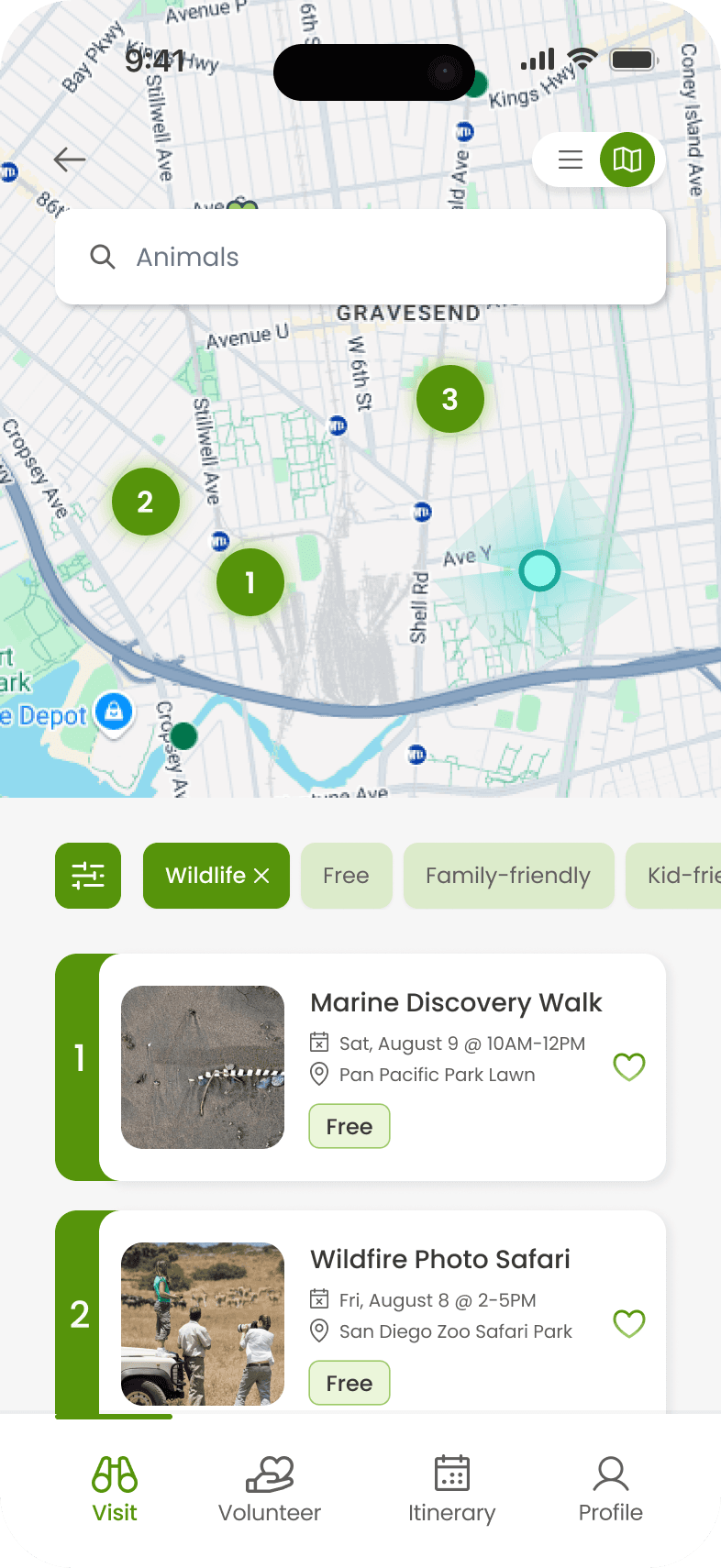
Final solution
Introducing Kindness Trails: your local app for outdoors event discovery & itinerary building!

Onboarding: introducing our altruistic mission, and the features that come with it
The purpose is to communicate the app’s personalized care for families and volunteers in a lightweight manner ( minimum questions, Browse Now option to dive right in).

Activity exploration: personalized browsing through different avenues
Browse categories using familiar sections (Recommended, Upcoming Events), and use user-backed filters (age, date, distance, cause) to find your event quickly

Activity evaluation: reviewing key highlighted info and taking key actions
Make the ultimate decision with all the factors consolidated in one view (cost, safety). Share the activity with someone to get a second opinion, or add it to itinerary for later.

Itinerary building: creating full days of outdoors, volunteering activities
Manage your more complex plans by building a visual itinerary. Organize logistical details all in one place, share it with others, and integrate it with your Google Calendar!
Feedback from industry professionals
Design critiques from industry professionals
I received feedback from a Senior UX Researcher @ Google, and we presented to a panel of Bloomberg and Cisco professionals for Demo Day!

Overall, I received positive feedback on visual design polish and collaborative leadership, but I have room to work on using more success metrics and storytelling.
Google UX researcher
Throughout the client meetings, my proactive communication skills stood out, but I could’ve used more storytelling to really nail the idea buy-in.
See some kind words from my client
Bloomberg & Cisco leaders
The Bloomberg & Cisco product leaders liked our professional designs/presentation with a 96/100 score across design, impact, and feasibility. The -4 is how we could’ve incorporated more success metrics.
Learnings to take forward!
What I learned about the product life cycle
Design for client values/goals
It’s just as important as designing for user needs. Map out UX tradeoffs.
Prioritize under tight timelines & resources
Admist 100x design change choices, reference bigger goals to choose what to do.
Lead by example, that’s the only way
Take periodic reflections on how to best lead for the team’s success.
#Grateful :)
Thanks so much to the Develop For Good program, and my awesome team for making this such a fulfilling summer!
Peep, me in the top left corner